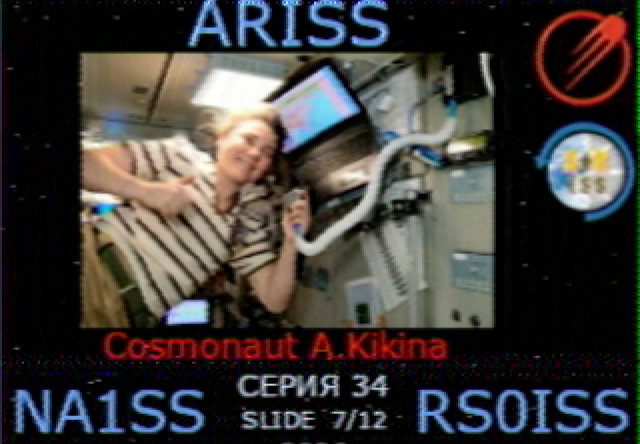
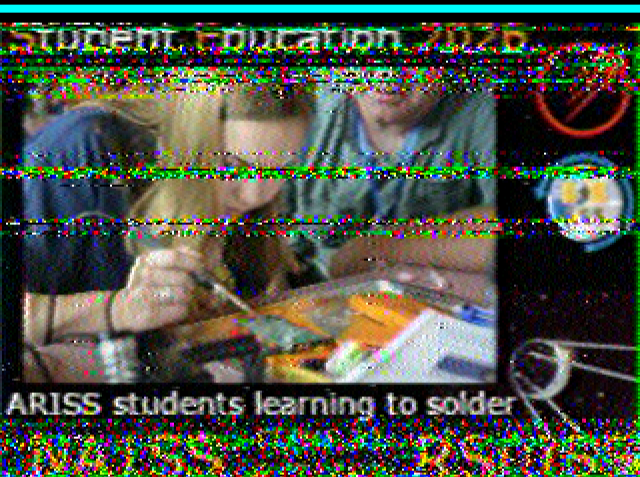
Yesterday (10-25-2026) I got my first perfect SSTV image. It was from Expedition 75, series 34 of the ARISS SSTV events. Capturing images broadcast from the ISS requires a little preparation, and a little luck, and I finally got lucky yesterday. I almost missed this event, since I wasn’t aware that there was even one going on until a friend told me.
Since the last time I posted about SSTV, I’ve purchased a handheld antenna, an Elk log periodic 144/440 antenna. It is a directional antenna, which means I can point it at the ISS as it passes overhead, and increase the odds for good reception. Although I did not purchase it from Amazon, here’s a link to the same one that I have: https://link.amazon/B0ikG1SYJ If you’ve been considering a hand held, and you get it from this link, I’ll get a little kick back.
Also, I’ve been using the good old Baofeng UV-5R for a while. Recently, I purchased a mystery box from Radioditty, and received a Baofeng UV-5RM Plus. Again, I didn’t purchase mine thru Amazon, but here’s a link if you’re interested: https://link.amazon/B0aidC2x3 Although it doesn’t matter for SSTV, since all you are doing is receiving a signal, it will help me later when I start working on hitting the repeater on the ISS since it is a half duplex radio, and transmits up to 10 watts instead of 5. I’m still using the Robot36 app on my phone, and simply holding it up to the speaker on the radio. Finally, I also use an app called ‘ISS Detector’ on my phone to get an idea of the direction the ISS is traveling.
As for the luck part… the ISS passed over at about a 70 degree pass, which was almost directly overhead. The pass would take about 6 minutes from the time it came above the horizon, until it disappeared below the horizon again. The ISS typically broadcasts each image, and pauses for a period between images. In this case, each image took 36 seconds to send, with a 2 minute break. I could barely hear the end of a SSTV transmission as it breached the horizon, which meant it would be 2 minutes before it started transmitting again. This was great, since it would put the ISS almost directly overhead. With perfect weather, and no interference, I was able to capture the image below.
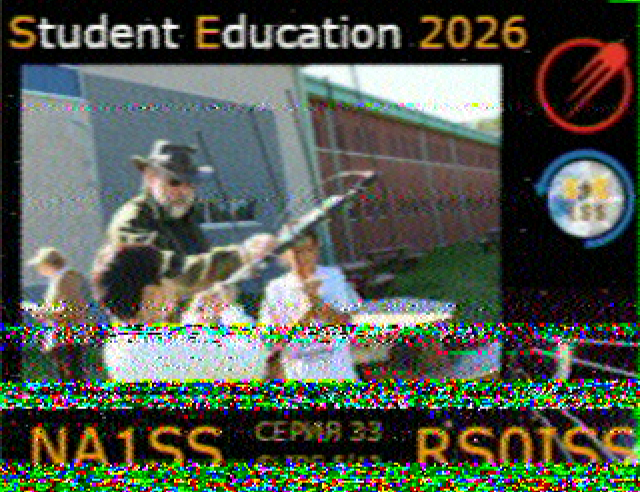
I knew the likelihood of getting a good second image was pretty low, since the timing put the ISS very low on the horizon from me but I did manage to get this one on the same pass:
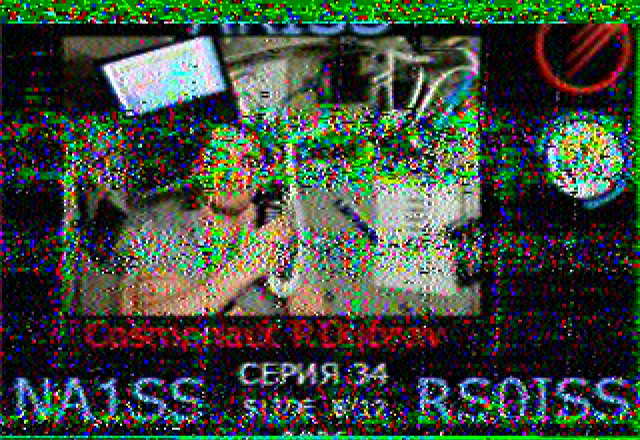
There were no other good passes that I was able to participate in, and the event ended today, so these 2 are the only images I’ll get for this series.
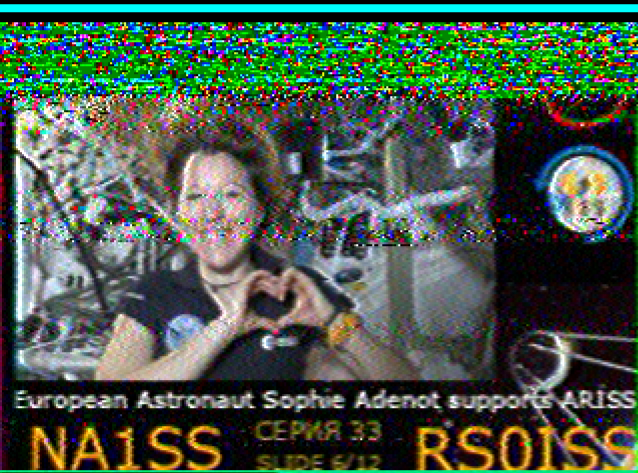
I was also able to capture 3 images from an event (Series 75, event 33) in Sept and early Oct, as seen below. The timing during this event never seemed to be good for me. Most of my attempts seemed to happen when either the ISS was traveling in a low trajectory, very low on the horizon, or the timing would be such that the image would get cut off as the ISS dipped below the horizon. Like I said earlier, there’s some luck involved too.
If you want to try capturing SSTV images from the ISS, all you need is something capable of receiving VHF or UHF signals (the specific frequencies they use are posted to the websites below), and a phone running a free SSTV decoding app. A directional antenna is not necessary, but it helps. Before I purchased my Elk, my previous best image was captured using a radio attached to a CB antenna. Bending and orienting the antenna as it passes by helps, but it’s just trial and error to figure out what works.
This link is where ARISS posts the upcoming events once they are scheduled: Upcoming SSTV events – ARISS As of today, the next one is not currently scheduled, but they do update it once plans are made. They also have a Facebook page: Facebook
I’m no expert, but if you have questions, feel free to contact me.
Peace out y’all!
KR4DYT