
So many letters for so many different things…
Before I obtained my ham radio license, I tried capturing SSTV images from the ISS. Just in case you’re not familiar, the ISS is the International Space Station, and SSTV is Slow Scan Television. SSTV images are occasionally broadcast from the ISS to drum up interest in space, radios and all things STEM.
There is a wiki page that explains what SSTV images are, but if you’re not THAT interested, its just a technique for transmitting pictures. When they’re being broadcast, it sounds like various beeps and boops. You can download a free app to your phone (on Android, I use an app called ‘Robot36’) and simply hold your phone up to your radio speaker when they’re being broadcast. The app should do the rest. How successful you are depends mostly on your antenna, and the location of the ISS in relation to you. Directional antennas seem to work best, but I’ve read of folks having success with a simple Baofeng and stock antenna.
For those more advanced folks, with the right equipment, you can plug your radio directly into your computer and eliminate the background noise that comes with trying to hold your phone to your radio.
I’ve tried several times over the last couple of years to capture pictures with my Baofeng and the app. I didn’t have much luck initially, only getting some bits and pieces of pictures, but each time we learned a little more. Prior to yesterday, the best picture I captured was using my Baofeng, with a rooftop magmount CB whip antenna. My younger son and I would go outside, and have 1 radio with the CB antenna and the other with a regular antenna, both on at the same time. We could move and bend the CB antenna around a little and improve reception, getting about 75% of a whole picture.
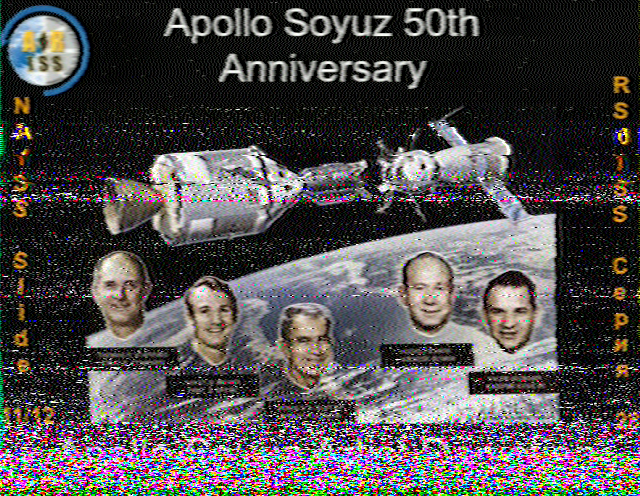
Yesterday, I was able to capture the picture below using my FTM-150 and a Diamond X200 antenna. My antenna is not directional, plus its mounted on a pole, so I can’t do anything with it to change the reception like I could with the handhelds, but the larger antenna and optimal conditions (the ISS passed almost directly overhead) made for the best picture I’ve captured so far.
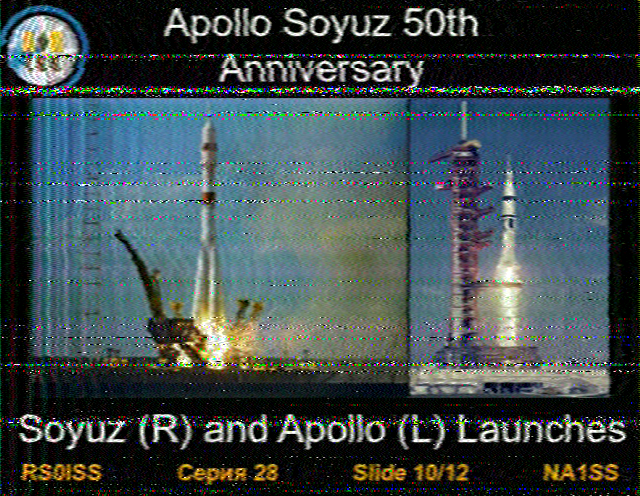
SSTV images are not broadcast all the time. I don’t know how they schedule broadcasts, but when they do, its typically for several days, and they will rotate thru several pictures. When they’re broadcasting, the images coming from the ISS are broadcast from the Russian module in 2 minute intervals. Each image takes about 2 minutes to broadcast, so if you’re trying to participate, you should hear something within 2 minutes at any time, if you’re within range. The images commonly have a Russian theme, or at least a Russian component to them, as seen in the image above.
Once you’ve captured a picture, you can upload it to the ARISS (Amateur Radio on the International Space Station) website and receive a certificate! Purely for research purposes, I uploaded my picture, and got this certificate in return:
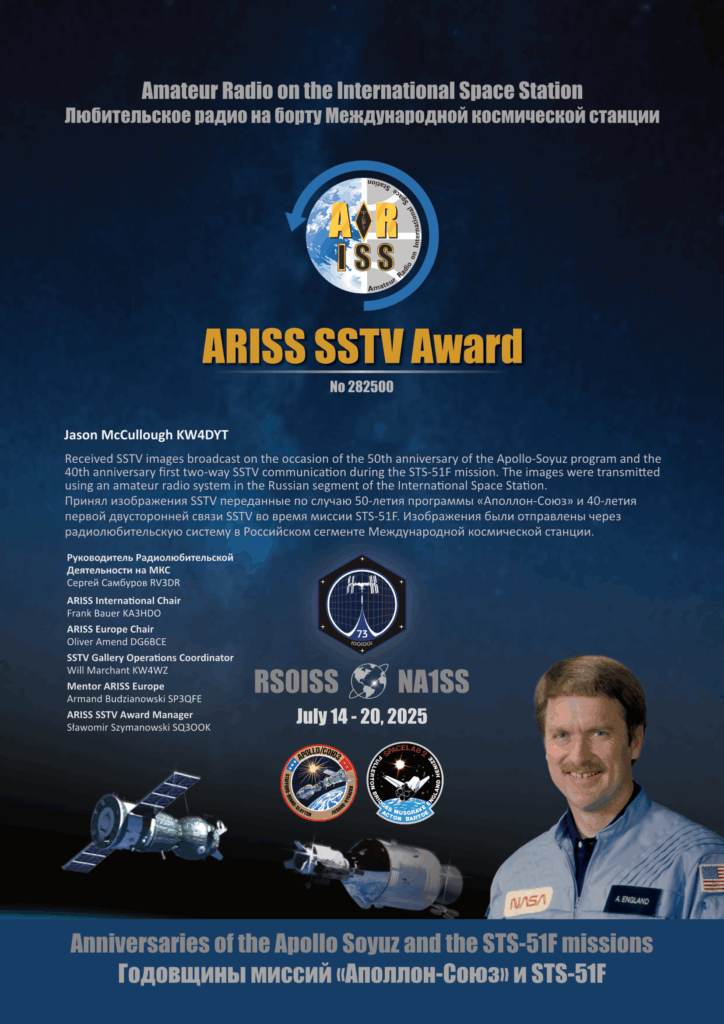
For those folks who may have keen eyes, yes, I know the call sign on my certificate is incorrect. I’m not sure if I had a case of the fat fingers, or if the person who reviewed my application (yes, it actually has to be reviewed) typed it in wrong, but I’m still counting it.
The picture above was the only image I was able to capture during that pass. I could hear the sounds of the image before, and after being broadcast, but the ISS was below the horizon and there was too much static for me to be able to pick up a suitable signal.
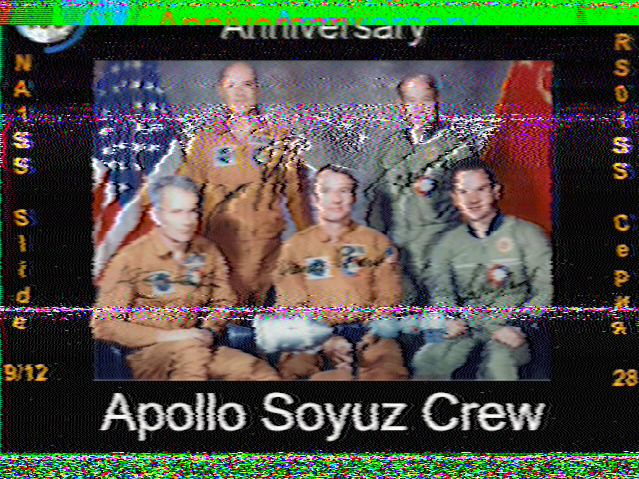
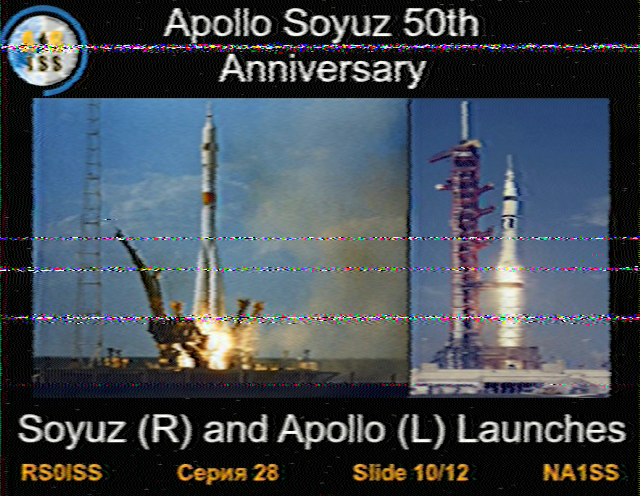
A friend of mine has a hand held yagi antenna, and be was able to capture all 3 of the images below on the same pass that I was only able to get one. Its pretty amazing to me that the relatively smaller, hand held yagi was able to pick up so much more than my 9 ft tall antenna.
For anyone who’s interested in radio’s, this is an interesting and fun experiment to participate in. Since you’re not transmitting anything, you do not need a ham license (or any other license) to receive the broadcast. The ARISS Facebook page announces when they’re broadcasting images. With an ISS tracking app, or website, you should be able to figure out when is a good time to receive broadcasts. A free app decodes the image, and all you need is a cheap radio, SDR, or scanner, capable of picking up VHF frequencies.